
Steering Knuckle Replacement Cost: Parts, Labor, and Total Price

This guide breaks down the expected charges and explains how vehicle design, bare versus loaded assemblies, bearing work, corrosion, and local labor rates affect the final price.


Quick Answer
A realistic 2026 U.S. budget for steering knuckle replacement is $500 to $1,300 per side, including the replacement part, professional labor, and a wheel alignment. A straightforward job using an aftermarket part may cost less, while an OE-priced part, a loaded assembly, severe corrosion, or extra hub and bearing work can push the bill higher. Your vehicle and the parts included in the quote matter more than a single national average.
Safety note: A steering knuckle connects safety-critical steering, suspension, wheel-end, and brake components. Have visible cracks, bending, impact damage, or an abnormal wheel position inspected before driving. Do not authorize replacement from noise or vibration alone, because a wheel bearing, ball joint, tie rod, tire, or alignment issue can produce similar symptoms.
How Much Does Steering Knuckle Replacement Cost?
Most estimates contain three main charges: the steering knuckle or knuckle assembly, the labor required to remove and install it, and an alignment check or adjustment. The ranges below are a consumer budgeting guide based on current U.S. parts listings, repair estimates, and shop labor rates. They are not a vehicle-specific quote, and taxes, diagnostic fees, shop supplies, and related repairs may be additional.
| Cost item | Typical 2026 U.S. range | What changes the price |
|---|---|---|
| Aftermarket bare knuckle | $100–$500 per side | Vehicle, position, brand, and supply |
| Loaded knuckle assembly | $150–$500 per side | Included hub, bearing, shield, sensor, or hardware |
| Professional labor | $240–$600 | Labor time, local rate, corrosion, and bearing work |
| Alignment | $100–$275 | Two-wheel versus four-wheel service and local pricing |
| Typical installed total | $500–$1,300 per side | Part configuration, labor, and alignment combined |
The figures should not simply be added at their maximum values. A loaded assembly may cost more than a bare knuckle but can avoid transferring or pressing some old components. Conversely, a low-priced bare knuckle can produce a higher installed bill when the shop must press a bearing or replace a damaged hub.
What Factors Have the Biggest Effect on the Final Price?
Vehicle, position, and drivetrain
Year, make, model, trim, front or rear position, and left or right side determine which part fits. Suspension geometry and drivetrain also change the work involved. On some FWD or AWD vehicles, the technician must work around or disconnect the axle shaft. A rear suspension knuckle may have different mounting points and should not be priced as if it were the same part as a front steering knuckle.
Bare knuckle versus loaded assembly
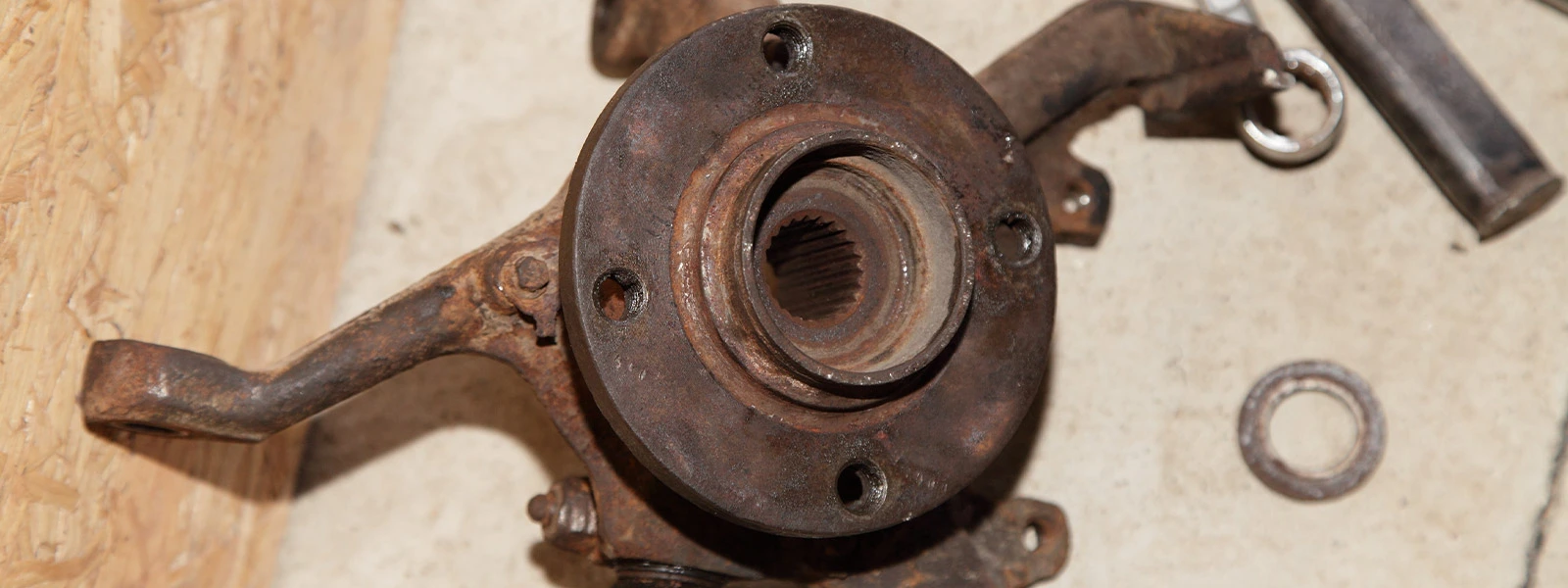
A bare knuckle is primarily the structural casting. A loaded assembly may include the wheel hub, bearing, dust shield, or other hardware. Package contents vary by listing, so the word “assembly” does not guarantee that every wheel-end component is included. Compare the installed cost, not just the price shown for the part.
Labor time, corrosion, and special equipment
Many U.S. repair shops charge roughly $120 to $159 per labor hour, while rates can be below $100 or above $200 depending on location and shop type. Seized bolts, corrosion around the hub, a press-fit bearing, or difficult access can add labor. Ask whether the estimate assumes a normal removal or includes extra time for rusted or damaged hardware.

Related parts and alignment
A shop may find a damaged hub, bearing, ABS sensor, backing plate, ball joint, tie-rod end, or mounting hardware during disassembly. These parts should be added only when inspection confirms they are damaged or cannot be reused. Because knuckle replacement disturbs steering or suspension connections, budget for an alignment check and any required adjustment before normal driving.
Is a Bare or Loaded Steering Knuckle Cheaper Overall?
| Option | Usually makes sense when | Cost tradeoff |
|---|---|---|
| Bare knuckle | The existing hub and bearing are serviceable and the shop can transfer them correctly | Lower part price, but possible press work and additional labor |
| Loaded assembly | The bearing or hub also needs replacement, or avoiding press work reduces installation complexity | Higher part price, but potentially less assembly time |
Ask the shop to quote both options when both are available for your vehicle. Confirm every included component, because two products described as loaded knuckles may not contain the same parts.
Do You Need to Replace One Steering Knuckle or Both?
Steering knuckles are not normally replaced in pairs simply because one side is damaged. Replacing only the confirmed damaged side is common. The opposite side and nearby suspension parts should still be inspected after a curb strike, collision, severe corrosion, or another event that could have affected both sides.
A two-piece product package can lower the per-part price, but buying a pair is not automatically the least expensive repair. Compare the cost of the parts you actually need, the added labor, and the inspection findings before approving both sides.
How Can You Estimate the Cost for Your Vehicle?
Use this calculation when comparing estimates:
Part price + labor hours × shop labor rate + alignment + confirmed related parts + taxes and fees
A useful written quote should identify the exact side and position, whether the part is bare or loaded, which components are included, the billed labor hours, whether alignment is included, and which added parts are required. If the quote only says “knuckle assembly,” ask for the part number and package contents before comparing it with another estimate.
- Confirm year, make, model, trim, and engine.
- Confirm front or rear and driver or passenger side.
- Check FWD, RWD, AWD, or 4WD requirements.
- Verify whether hub, bearing, dust shield, sensor, and hardware are included.
- Ask whether alignment, diagnostic time, taxes, and shop supplies are included.
How Can You Control the Cost Without Buying the Wrong Part?
Start with fitment, not the lowest advertised price. A part for the wrong side, drivetrain, brake configuration, or bearing design can create return costs and repair delays. Compare bare and loaded options using the same repair scope, and ask the shop whether it will install a customer-supplied part before ordering.
A-Premium offers both steering knuckles and steering knuckle assemblies. Enter your vehicle details, then verify position, drivetrain, product notes, and included components. A guaranteed-fit selection is more useful than a generic low price that does not match the repair.
FAQs
How much is a steering knuckle by itself?
An aftermarket bare steering knuckle commonly costs about $100 to $500 per side. Loaded assemblies can cost about $150 to $500, depending on the vehicle and included hub, bearing, shield, or hardware.
How much is labor to replace a steering knuckle?
A reasonable labor budget is about $240 to $600. The shop rate, suspension design, corrosion, axle removal, and bearing press work can change the amount.
Does steering knuckle replacement include an alignment?
Not always. Ask whether the written estimate includes an alignment check and adjustment. If it is separate, budget roughly $100 to $275 depending on the vehicle, service type, and location.
Is a rear knuckle more expensive than a front knuckle?
Not necessarily. Rear and front designs differ by vehicle, and either can be more expensive. Compare the exact part, included components, and labor procedure for the specified position.
Can you replace only one steering knuckle?
Yes. Replacing only the damaged side is common when the opposite knuckle passes inspection. Both sides do not need automatic replacement.
Why did the repair quote also include a wheel bearing?
The bearing may be damaged, seized in the old knuckle, or impractical to transfer without damage. Ask the shop to explain the inspection finding and whether a loaded assembly changes the total installed cost.


