
Should You Replace Your Engine Air Filter and Cabin Air Filter at Once?

Wondering if you should replace your engine air filter and cabin air filter at the same time? While they protect different parts of your car, swapping them together saves time, improves cabin health, and boosts engine efficiency.


As a driver, staying on top of routine vehicle maintenance can sometimes feel like an endless balancing act. During a standard oil change or inspection, you will almost certainly be asked: "Should I replace my engine air filter and cabin air filter at once?"
While these two filters serve completely different parts of your car, replacing them as a matching pair is one of the smartest, most cost-effective decisions you can make for both your vehicle's performance and your personal health. Let’s dive deep into the science, signs, and step-by-step solutions of automotive air filtration.
What Is the Difference Between an Engine Air Filter and a Cabin Air Filter?
To understand why a dual replacement makes sense, we must first look under the hood and inside the dashboard to establish the difference between these two components.
The Engine Air Filter: Your Engine's Shield
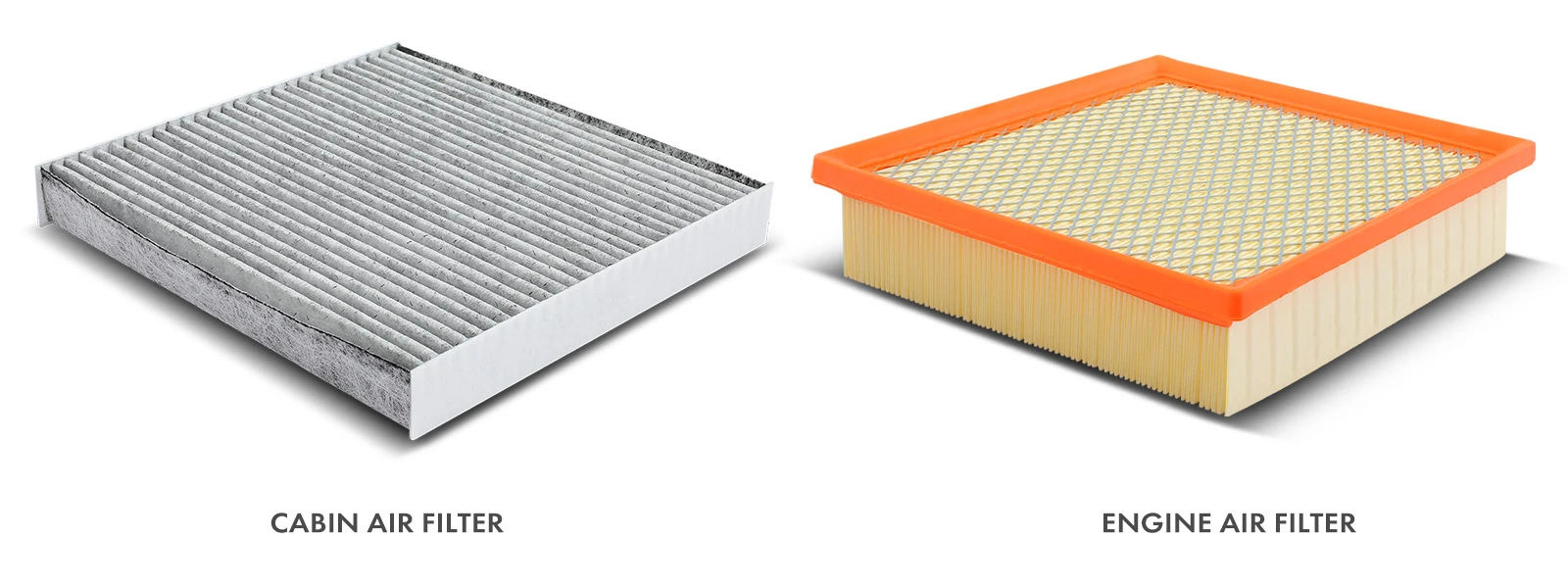
The engine air filter is your vehicle’s first line of defense against the outside world. It is specifically designed to trap dirt, dust, and road debris before it can enter the combustion chamber. An engine needs a precise balance of fuel and oxygen to run; the air filter ensures that the incoming air is pure. Common air filter types for the engine include traditional pleated paper, foam, and high-performance reusable cotton gauze.
The Cabin Air Filter: Your Personal Lung Protector
Historically, automotive filtration focused solely on the machine. Did you know that Saab first introduced cabin air filters to the mass automotive market in the 1979 900 model? Today, the cabin air filter is a standard component across the industry. It cleans air entering the vehicle through the heating, ventilation, and air conditioning (HVAC) system. By acting as a barrier against airborne particles, it directly protects the driver and passengers rather than the mechanical components.
How Do Automotive Air Filters Work?
Both systems rely on advanced media to trap microscopic threats, though they target different environmental hazards.
Engine Filtration Mechanism
A clean engine air filter supplies clean airflow to the engine by utilizing a porous barrier that allows air molecules to pass through while capturing physical debris. By trapping harmful contaminants, it protects internal engine components from premature wear and catastrophic scoring. A clean engine air filter ensures optimal airflow for complete combustion, keeping the powertrain operating at its peak efficiency.
Cabin Filtration Mechanism
The cabin air filter purifies the atmospheric air pulled in from heavy traffic zones. Standard filters trap dust, soot, and plant matter. However, premium versions utilize an activated charcoal layer. This engineered media goes a step further by adsorbing harmful gases and eliminating foul odors. Premium cabin air filters can trap up to 99.97% of airborne particles, drastically reducing allergens, bacteria, and mold spores to help prevent allergic reactions while driving.
What Are the Signs of a Clogged Filter?
When your filters reach the end of their lifespan, your car will drop distinct clues. Ignoring a clogged filter compromises the baseline performance of your vehicle.
Signs of a Dirty Engine Air Filter
-
Sluggish Throttle Response: Restricted airflow from a dirty filter starves the engine of oxygen, resulting in a noticeable lag when you step on the gas.
-
Reduced Fuel Efficiency: When oxygen levels drop, the vehicle's computer alters the combustion balance by injecting more fuel, which can negatively impact your overall fuel economy.
-
Check Engine Light: Extreme restriction can disrupt mass airflow sensor readings, triggering a check engine light on your dashboard.
-
Increased Emissions: A clean air filter contributes to lower harmful emissions from vehicles; conversely, a choked one causes an incomplete burn, increasing your environmental footprint.
Signs of a Failing Cabin Air Filter
-
Weak HVAC Airflow: If your dashboard vents feel like they are barely blowing even on the highest setting, a dirty filter is likely choking the system.
-
Persistent Musty Odors: Dust and moisture trapped in the media become breeding grounds for bacteria, blowing foul smells into the cabin.
-
Excessive Window Fogging: Restricted cabin airflow hinders the vehicle's ability to clear away moisture and condensation from the interior glass.
Engine Air Filter vs. Cabin Air Filter: A Structural Comparison
While they are both critical to maintenance, their operational profiles differ slightly:
|
Feature |
Engine Air Filter |
Cabin Air Filter |
|
Primary Target |
Dust, dirt, leaves, pebbles, and road grit. |
Pollen, dust, mold spores, exhaust fumes, and odors. |
|
Location |
Housed in an airbox under the hood near the intake. |
Generally located behind the glovebox or under the dash. |
|
Average Lifespan |
12,000 to 15,000 miles (up to 30,000 in ideal conditions). |
12,000 to 15,000 miles (or at least once a year). |
|
Core Value |
Prevents internal engine damage and maintains power. |
Ensures clean air and health comfort for passengers. |
Why Should I Replace Both Filters at the Same Time?
You do not have to replace them together by law, but synchronizing their replacement offers distinct advantages:
1. Shared Environmental Exposure
Both filters are breathing the same air. If you regularly navigate heavy traffic, traverse dusty dirt roads, or live in a region with dense seasonal pollen, both units are accumulating debris at an identical rate. If a visual inspection reveals your engine filter is completely choked, your cabin filter is likely facing a similar level of contamination.
2. Streamlined Maintenance Tracking
Consolidating your filter changes onto a singular calendar date or mileage interval takes the guesswork out of your maintenance schedule. Instead of trying to remember separate timelines, changing them as a pair means you establish a clean baseline for the year ahead.
3. Maximum Cost Savings
Dealerships and repair shops often charge hefty labor fees to replace these items individually—frequently asking for $50 to $100+ per filter. By purchasing a combined kit and replacing them yourself simultaneously, you cut out professional labor markup entirely.
How Do I Replace My Engine and Cabin Air Filters at Home?
You don't need to be a professional mechanic to execute this job. It is an incredibly straightforward DIY task that requires minimal time and no complex tools. Always consult your vehicle's owner's manual for your specific model specifications before starting.
Step-by-Step Engine Air Filter Replacement
-
Locate the Airbox: Pop the hood of your vehicle and locate the large, black plastic housing box, usually positioned on the side of the engine bay.
-
Open the Housing: Unfasten the metal retaining clips or remove the few screws securing the airbox cover.
-
Remove and Inspect: Lift the cover, pull out the old filter, and perform a quick visual inspection. If it looks dark grey or full of debris, it needs to go.
-
Install the New Filter: Clean any loose leaves out of the empty box, drop the new filter in (ensuring the rubber seal sits perfectly flush), and re-secure the cover clips.
Step-by-Step Cabin Air Filter Replacement
-
Access the Cabin Housing: Open your passenger-side glovebox. Most modern cars feature a dampener arm or stopper clips that allow the glove box door to drop down completely, revealing the filter access page behind it.
-
Remove the Access Door: Squeeze the tabs on the plastic filtration cover door to pop it off.
-
Note the Airflow Direction: Look closely at the "Air Flow" arrows stamped on the old filter before sliding it out. Your replacement must face the exact same direction.
-
Insert the Clean Filter: Slide the fresh cabin filter into place, click the access door shut, and reinstall your glovebox.


The Perfect Solution: A-Premium Engine & Cabin Air Filter Kits
Whether you are performing a complete seasonal overhaul or just replacing a single clogged filter, A-Premium offers the ultimate flexibility for your vehicle’s maintenance needs. Recognizing that every driver's schedule and environment are unique, A-Premium provides both all-in-one Engine & Cabin Filter Kits and individually packaged single filters.
Why Choose A-Premium Kits?
-
Engineered Precision: Every filter is rigorously tested to meet or exceed original equipment manufacturer (OEM) standards, ensuring an airtight, factory-level fit for your specific vehicle model.
-
Premium Cabin Defense: A-Premium cabin filters utilize advanced activated charcoal layers to neutralize toxic highway exhaust fumes and trap stubborn odors effortlessly.
-
Uncompromised Engine Flow: Their engine air filters are designed to offer the perfect balance between high-efficiency particle trapping and unrestricted airflow to keep your engine running smoothly.
-
Unbeatable DIY Value: By eliminating the middleman and professional labor markups, A-Premium makes home maintenance incredibly budget-friendly—allowing you to choose the exact buying option that fits your budget and timeline.


