Why Is Your Engine Pinging? Diagnosing P0327 (Knock Sensor Circuit Low)

This guide delivers a fast, precise blueprint to diagnose and fix P0327 when triggered by a check engine light, power loss, or engine pinging.

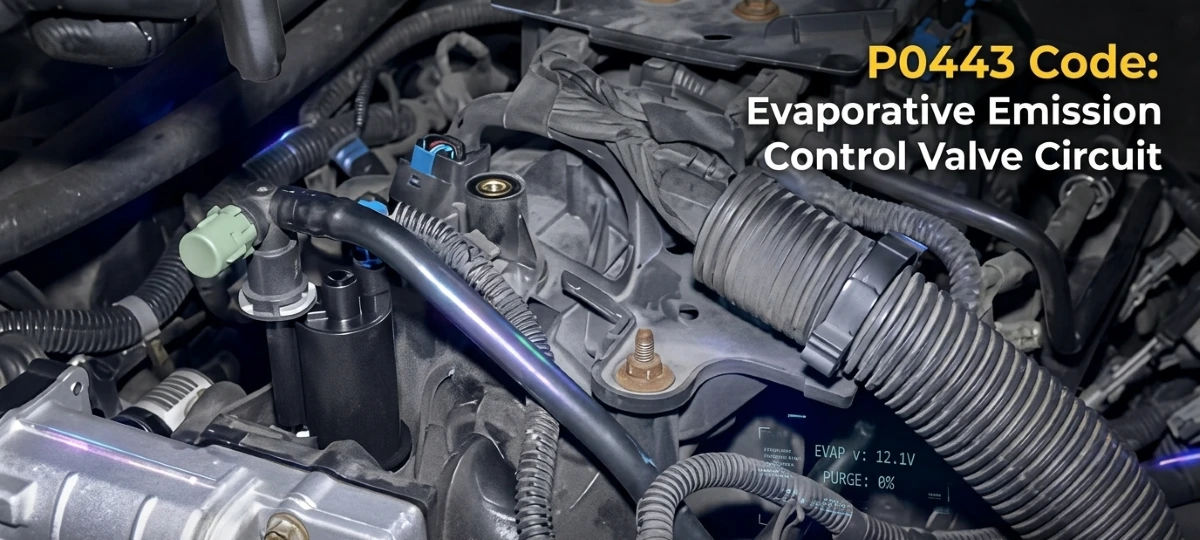
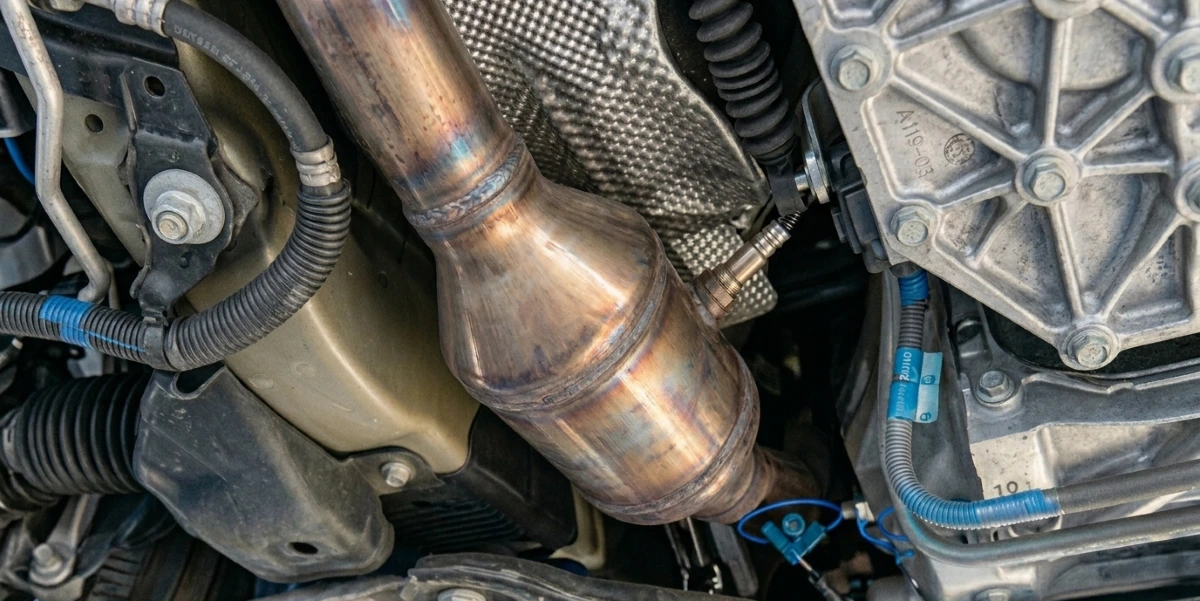
Imagine accelerating onto the highway, pressing down on the gas pedal to merge smoothly with traffic. Instead of a crisp, seamless response, you hear a faint, metallic clicking or rattling sound coming from under the hood. Moments later, an amber check engine light flashes on your dashboard, and your vehicle instantly feels sluggish, as if it lost its throttle responsiveness.
If you hook up an OBD-II diagnostic scan tool, you will likely find DTC P0327 stored in the module's memory.
This diagnostic trouble code points to a distinct electrical malfunction within your knock sensor circuit—specifically indicating a low signal voltage return. Far from being a minor electronic glitch, ignoring a P0327 knock sensor fault can quietly compromise your car's fuel efficiency and expose internal rotating assemblies to destructive mechanical stress.
Let's break down the engineering principles behind this code, isolate the precise symptoms, and map out a professional, step-by-step diagnostic framework to fix the root cause.

Engine Knock Physics and Sensor Signal Architecture
To understand why DTC P0327 triggers, we must examine the combustion physics inside the cylinder head. Under normal operating conditions, the air-fuel mixture ignites smoothly via the spark plug, propagating a controlled flame front. However, under heavy engine loads, extreme combustion temperatures, or when using low-octane fuel, uncontrolled pre-ignition can occur.
When spontaneous pockets of fuel ignite prematurely, with knock actively happening in the combustion event, their shockwaves collide with the primary flame front. This erratic combustion creates violent, high-frequency harmonic vibrations known as engine knock or pinging.
The knock sensor measures the high-frequency sound waves produced by knock and sends that input to the ECU/PCM, which adjusts ignition timing to help prevent engine damage:
-
Piezoelectric Transduction: Inside the sensor, a precise piezoelectric ceramic element responds to structural harmonic vibrations. When engine knock occurs, the vibration compresses the crystal, causing it to generate its own low-amplitude AC signal voltage.
-
Dynamic Voltage Modulation: Under standard operating parameters, the sensor produces an output ranging from 0 to 4.5 volts, scaling up proportionally with the severity of the detected shockwaves.
-
The PCM Closed-Loop Control: The powertrain control module (PCM) constantly monitors this analog wave. The millisecond the signal exceeds background mechanical noise, the PCM commands an immediate retardation of the ignition timing to eliminate the knock, safely maximizing engine performance and structural lifespan.
The True Meaning of a P0327 Circuit Fault
DTC P0327 does not necessarily mean your engine is physically knocking. Rather, it means the PCM has detected that the input voltage from the primary knock sensor circuit has dropped below a critical threshold (typically near 0V) for a sustained period. Because the computer can no longer "hear" combustion stability, it triggers the check engine light as an emergency safety precaution.
Primary Symptoms of an Inactive Knock Sensor Loop
The moment a P0327 code sets, the engine control strategy switches from an adaptive timing optimization loop to a conservative fail-safe or "limp" mapping. Drivers will watch for the following distinct operational anomalies:
-
Inhibited Acceleration and Power Loss: Because the PCM cannot actively monitor for pre-ignition, it automatically retards ignition timing by several degrees as a defensive baseline. This results in sluggish throttle response and a noticeable decline in horsepower under load.
-
Audible Combustion Knocking: Without real-time timing corrections, actual pre-ignition pinging may occur completely unchecked during hill climbs or sudden acceleration, creating a distinct metallic rattling noise.
-
Deteriorated Fuel Efficiency: Running on a permanent timing retard skews thermal efficiency, resulting in incomplete combustion and increased fuel consumption.
-
Rough Idle and Stalling Tendencies: In rare cases, the fixed, non-adaptive timing values destabilize the engine’s idle control, causing rough idling or intermittent stalling during sudden deceleration.

Electrical and Mechanical Root Causes of P0327
Because P0327 is strictly categorized as a circuit performance code, diagnostic parameters require inspecting the entire electrical circuit pathway to identify the underlying problem rather than just assuming the sensor itself is broken:
-
Internal Sensor Open/Short: The internal piezoelectric crystal can crack due to thermal cycling, or internal seals can fail, causing an inner open circuit or short to ground; when the sensor itself is damaged or malfunctioning, replacing the knock sensor is often the most effective fix.
-
Corrosion and Environmental Contamination: Knock sensors are frequently nestled deep within the engine V-valley, directly below the intake manifold cover. If water, moisture, or engine coolant pools in this valley, it will penetrate the harness plug, corroding the connector pins and grounding out the low-voltage signal.
-
Wiring Harness Degradation: Under-hood wiring paths are exposed to intense radiant heat. Over time, the protective shielding on the knock sensor harness can become brittle, leading to chafed insulation, exposed wires, or severe rodent damage.
-
Improper Torque Application: Knock sensors are highly torque-sensitive components. Over-tightening crushes the internal piezoelectric crystal, while under-torquing prevents the sensor from reading structural vibrations correctly, locking the signal output at 0V.
-
Shared Harness Ground Failures: If you pull a P0327 alongside companion codes like P0332 (Knock Sensor 2 Circuit Low Input), the issue is almost certainly a compromised main harness trunk line or a loose engine ground block.
Professional Diagnostic and Repair Framework
To accurately isolate the root cause of a P0327 circuit code and avoid unnecessary parts replacement, use this systematic engineering protocol and focus on accurate diagnostic work:
Step 1: Scan Tool Analysis and Live Data Monitoring
Plug your diagnostic scan tool into the OBD-II port. Record all active and pending DTCs. Access live engine data to check the knock sensor voltage pids and timing retard values while gently revving the engine. If the signal remains dead at 0V, proceed to physical inspection.
Step 2: Bench-Testing Sensor Resistance
Turn off the ignition. Disconnect the electrical connector to gain direct access to the knock sensor pin points. Set your digital multimeter to measure resistance (Ohms, Omega). Connect one lead to the sensor's signal pin and the other to a clean chassis ground.
Factory Specification Target Range = 93K Omega to 107K Omega
If your meter reads infinite resistance (OL), the internal crystal loop has suffered an open circuit failure, confirming the sensor is defective and requires replacing.
Step 3: Inspect Reference Voltage and Harness Continuity
Switch your multimeter to DC Volts. Turn the vehicle key to the On (Engine Off) position. Measure the harness-side connector pin coming from the engine computer. You should read a stable reference voltage (typically 5.0V on most vehicles).
Inspect the plug body for green copper oxidation or trapped water. Spray the terminals with electronic contact cleaner to remove minor debris before reconnection.
Step 4: Component Installation and Precise Torquing
If the circuit tests clean but the sensor resistance is out of spec, complete a component replacement, as replacing the knock sensor is often the most effective solution when testing confirms the original sensor is faulty. Clean the mounting threads on the engine block thoroughly. Thread the new sensor in by hand, then use a calibrated torque wrench to tighten it strictly to factory specifications with quality factory parts for proper fit and reliability—typically 15 to 22 ft-lbs. Do not use thread sealant unless specifically instructed by the OEM service manual, as this can dampen acoustic transmission.
Step 5: Clearing DTCs and Road-Testing
Reconnect the electrical harness, boot up your scan tool, and ensure all diagnostic trouble codes are completely cleared and deleted. Take the car on a comprehensive test drive across varied RPM ranges to allow the PCM to execute its internal monitors and verify proper closed-loop communication.


Restoring Closed-Loop Stability with A-Premium
Because modern automotive engine management systems are calibrated to highly specific acoustic frequencies and electrical resistance windows, low-grade generic sensors often generate minor voltage deviations that trigger immediate recurring check engine lights.
At A-Premium, we manufacture exact-fit knock sensors and heavy-duty wiring harness assemblies engineered to perfectly mirror original equipment impedance and voltage outputs. Built using premium piezoelectric crystals and robust thermal weather-seals, A-Premium components resist moisture pooling and severe engine bay heat to deliver uncompromised ignition timing communication.
Visit A-Premium.com today to shop our vehicle-specific catalog online, search our vehicle-specific database, filter by your exact vehicle configuration, and select from thousands of durable, warehouse-direct replacement parts backed by fast, free shipping nationwide.


