
Car AC Compressor vs AC Condenser

Comparing the car A/C compressor and A/C condenser helps understand their individual functions and contributions to the overall performance of the air conditioning system, enabling informed decision-making for maintenance, repairs, or upgrades.


The compressor and condenser take center stage as the system's most critical components, playing a vital role in handling the initial refrigerant. Their contribution is indispensable, as the absence of these components would render the car's air conditioning system incapable of pumping out chilly and dry air into the vehicle.
Role of AC system in vehicle comfort
Looking back at the brief history of automotive air conditioning. In 1939, Packard became the first automobile manufacturer to have an air conditioning unit installed in its cars as an optional extra. The 1950s sprouted the beginning of several manufacturers offering air conditioning as an option in their automobiles. Between 1961-1964, the number of air conditioners installed in cars tripled due to its skyrocketing popularity. Today, air conditioning comes standard in almost every car sold throughout the world.
The car's AC system provides a comfortable driving experience by cooling the air, reducing humidity, and preventing windows from fogging up. Moreover, the AC system contributes to driving safety by ensuring clear visibility. It also improves air quality inside the vehicle by effectively filtering out dust, pollen, and unpleasant odors. Regular maintenance of the AC system is crucial to ensure an enjoyable driving experience.
Despite the prevalence of air conditioning in nearly every vehicle on the road, its workings are often misunderstood. Air conditioning is typically taken for granted as a standard feature in cars until it malfunctions. This blog post aims to shed light on two key components of the car's AC system: the compressor and the condenser, exploring their functions in cooling the vehicle and how they differ from each other..
How does the AC system work in a car
The AC system functions through the following process:
- Compression: The compressor raises the pressure of the refrigerant gas, resulting in an increase in both its temperature and pressure.
- Condensation: The high-pressure refrigerant gas passes through the condenser, where it releases heat and transforms into a high-pressure liquid by exchanging heat with the surrounding air.
- Expansion: The high-pressure liquid flows through the expansion valve, which restricts its flow and causes a rapid pressure drop, leading to a further decrease in temperature.
- Evaporation: The low-pressure liquid refrigerant enters the AC evaporator, where it absorbs heat from the surrounding air and evaporates into a low-pressure vapor.
- Cycle: The low-pressure vapor returns to the compressor, initiating a new cycle to continuously absorb heat and provide cooling effects.
The compression and condensation stages are essential phases in the car's air conditioning system, ensuring the uninterrupted progression of the entire process. Due to their adjacency and being the initial components of the air conditioning system, this "dynamic duet" is sometimes mistaken as a single unit! People believe that the compressor performs the tasks of the condenser, and vice versa. This is a common misconception that only adds to the mystique surrounding the air conditioning system.
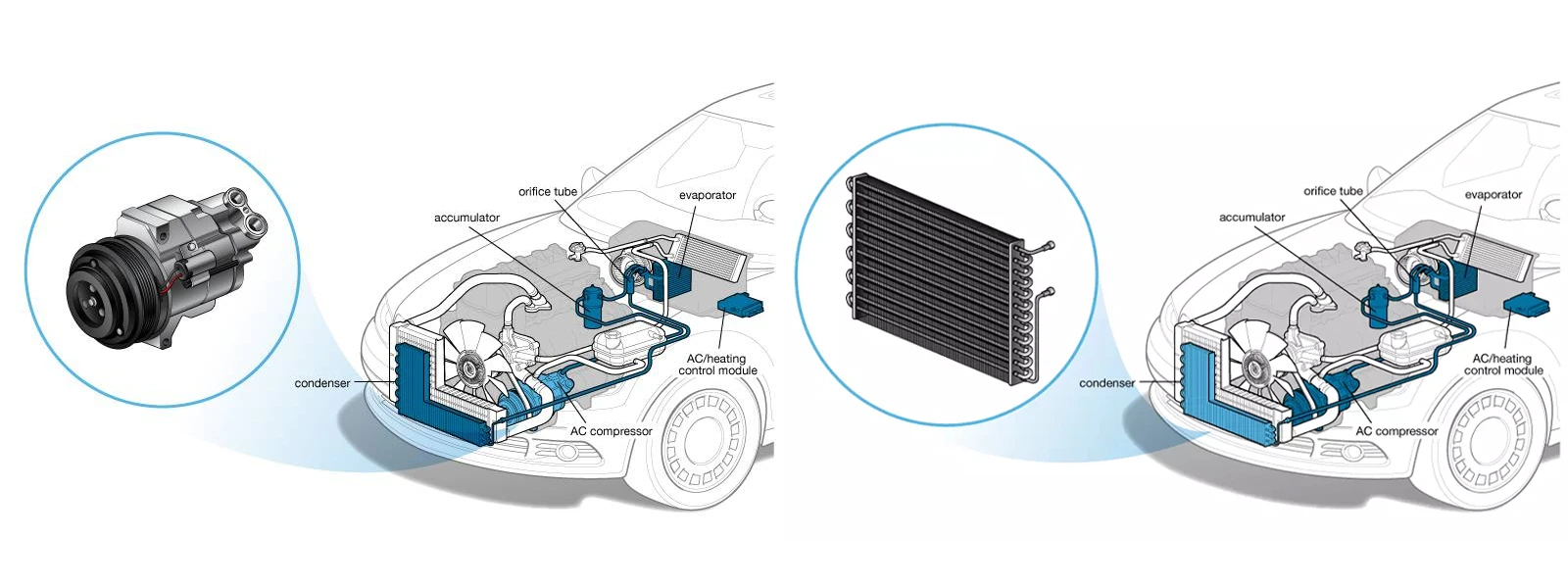
“Dynamic duet” between AC compressor and condenser
The AC compressor and condenser are dealing with the exact same thing: the AC refrigerant. But their roles are entirely unique. In simple terms, the distinction between a compressor and a condenser aligns with their respective names. The compressor's primary function is to compress, while the condenser's role is to facilitate condensation.
The air conditioning compressor draws in low-pressure and low-temperature gaseous refrigerant from the evaporator. By utilizing a piston or blade mechanism, it compresses the refrigerant, significantly increasing both its pressure and temperature to prepare it for condensation. The high-pressure refrigerant then moves into the condenser, where it releases heat to the surrounding air, facilitating the cooling process. As a result, the refrigerant transforms into a high-pressure liquid state.
The process may initially appear complex, but once you break down each step and understand their interplay, especially between the condenser and compressor, comprehending the air conditioning system becomes much easier. Having a better understanding equips you with the ability to diagnose air conditioning issues right from the start. This is immensely helpful, and can save a lot of time!
AC compressor and condenser longevity: cool tips for keeping your cool
Some maintenance habits you can stick to do are conducive to maintaining and extending the service life of air conditioning compressors and condensers:
- Change air filters: Cabin air filters are like tiny shields, protecting your compressor and condenser from dust, dirt, and other junk. This keeps them from wearing down too quickly and helps them last longer.
- Coolant check-up: Just like you check your car's oil, keep an eye on the coolant levels in your cooling system. Remember, an overheated engine can overheat your AC system's compressor and condenser, and that's definitely not cool.
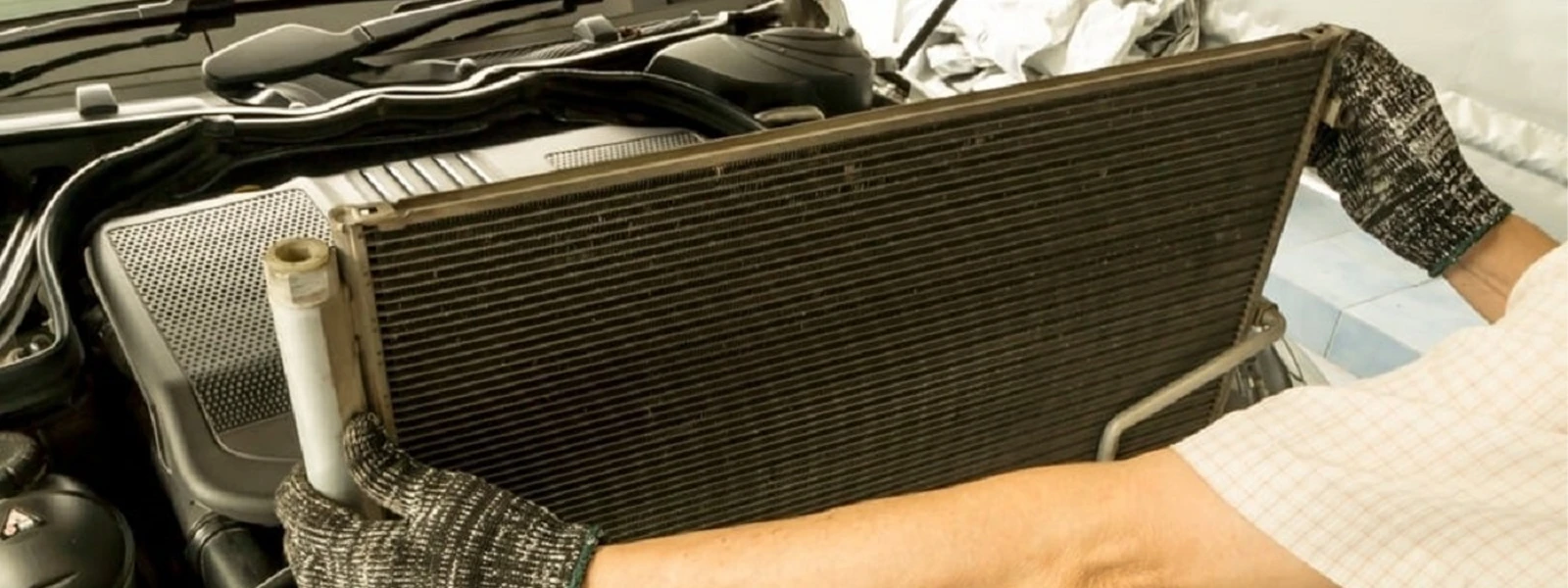
- Clean condenser coils: The condenser is kind of like a car's radiator but for the AC system. It's usually at the front of the vehicle, so it can get clogged with dust, bugs, and other road debris. Give it a regular cleaning to make sure it can breathe easily and keep things cool.
- Go easy on the AC: While blasting the AC is tempting on a hot day, using it constantly can put extra strain on the compressor and condenser, wearing them down faster. Fresh air is good for you, and it'll give your AC a bit of a break.
By following these simple tips, you can keep your car's AC system running smoothly and efficiently for years to come. Happy cool cruising!
Conclusion
AC compressors and condensers are crucial components in automotive air conditioning systems. Their efficient performance ensures comfortable temperatures, reduces humidity, prevents window fogging, and creates a pleasant environment for drivers and passengers. Therefore, maintaining AC compressors and condensers in optimal condition through regular maintenance is vital to enhance driving comfort.
FAQs
Should I replace the AC compressor and condenser at the same time?
It depends on the specific situation and the advice of the professional. You need to consider the compatibility of the system, the age and condition of them, the labor cost, and the convenience of joint replacement.
How much does it cost to replace an AC condenser and compressor?
In the USA, replacing both the AC condenser and compressor in your car can cost anywhere from $1,530 to $2,790, based on estimated labor costs and parts prices.
One smart solution: get your compressor or condenser from A-Premium.com. With the best selection of A/C parts online, you’ll have the necessary tools to do the job yourself. Save money and enjoy a personal sense of accomplishment.
What does a bad car AC compressor sound like?
A bad car AC compressor can produce several distinct sounds like grinding or clanking、loud rattling or shaking、hissing or squealing、clicking sound and noisy cycling on and off.
What is the most common cause of AC compressor failure?
A lack of lubrication is the leading culprit behind compressor breakdowns in AC systems. This vital oil acts as a friction fighter, ensuring smooth operation for the compressor's internal parts.
When should the car AC condenser be replaced?
The replacement of a car AC condenser may be necessary under certain circumstances such as damage or leakage; refrigerant leak, reduced cooling efficiency, contamination or blockage, age and wear, etc.


