Types Of Car Brake Rotors

For safe and reliable driving, a well-functioning braking system is paramount. Brake rotors rank among the most essential parts of the braking assembly. Let's take a closer look at what rotors are, the different rotor options.
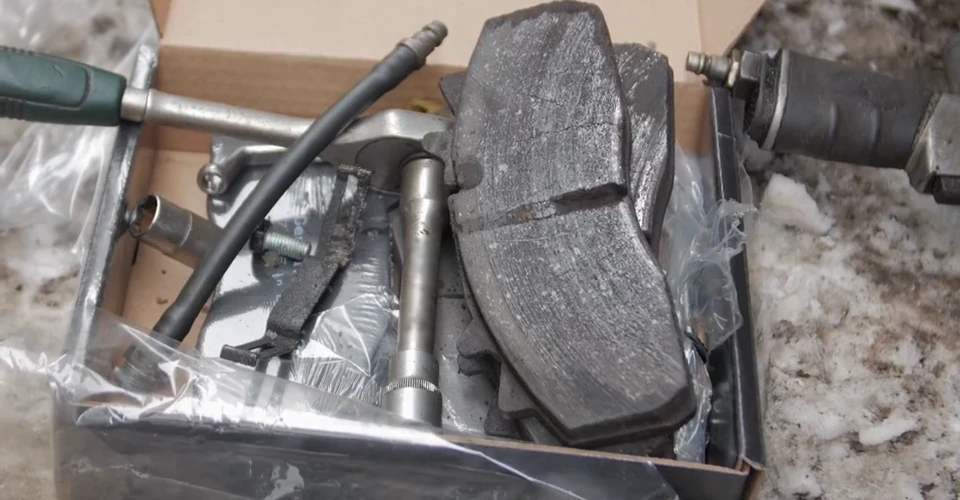
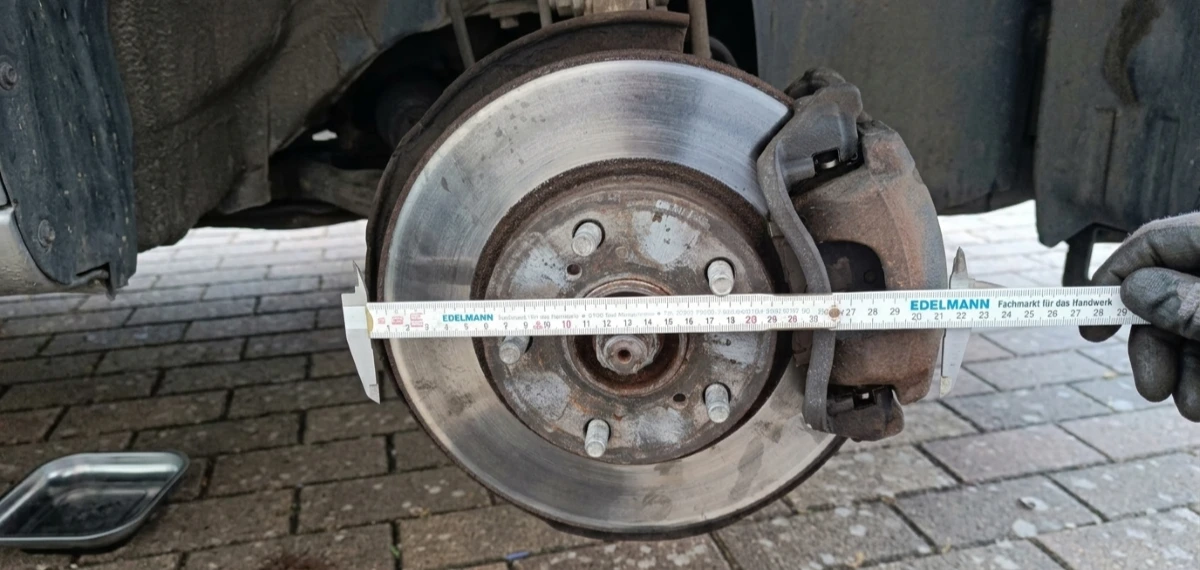
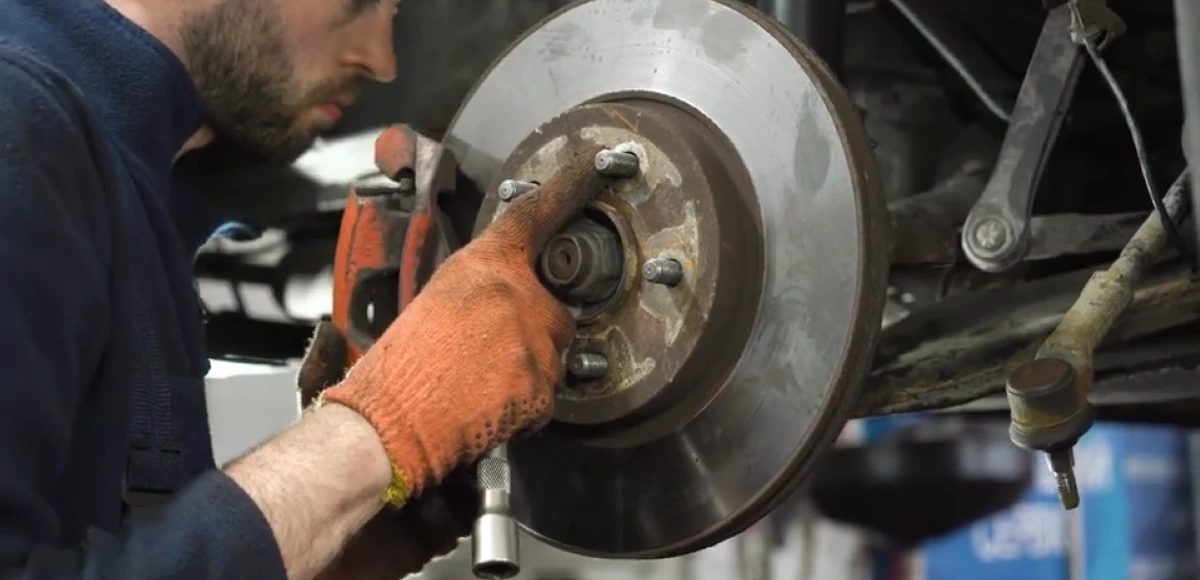


For safe and reliable driving, a well-functioning braking system is paramount. Brake rotors and drums are both essential components of the braking assembly, each designed to play a critical role in vehicle safety and performance. Understanding the different types of brake rotors helps ensure you get the reliable stopping power your vehicle needs. Aftermarket brake rotors are designed to fit specific vehicle makes, models, and years, and are often guaranteed to fit original equipment manufacturer specifications. Let’s take a closer look at what rotors are and the different rotor options available for your car.
Brake rotors can be purchased individually or as part of a complete brake kit that includes pads and other components.
What Are Brake Rotors (Brake Disc)
For the average American driver, applying the brakes is a common occurrence, happening around 200 times per day. With each braking event, you rely on the proper functioning of 40+ components to safely bring your vehicle to a halt. Among the key elements in your car’s braking system are the rotors, which play a critical role in dissipating the heat generated by the brake pads during braking. Brake rotors are circular discs connected to each wheel of a vehicle.
Brake rotors are the backbone of a vehicle’s braking setup, providing the essential means for slowing down and coming to a stop. When the driver steps on the brakes, the large, metal discs bolted to each wheel—the rotors—work in lockstep with the brake pads to generate substantial friction. The pad tightens on the rotor when you press on the brake pedal, creating friction that slows down the vehicle. This friction-based interaction is what allows the rotors to rapidly transform the car’s kinetic energy into thermal energy, giving the driver the ability to decelerate and halt the vehicle. Making high-quality brake rotors requires extensive experience and expertise, with careful attention to material selection, design, and precise fabrication to ensure durability and performance that meet or exceed industry standards.
Brake rotors can wear out over time due to the stress of daily driving, so replacing worn rotors is essential for safety. Signs of a bad brake disc include squealing noise when braking and vibrations while braking. Rotors typically last between 30,000 and 80,000 miles and should be inspected or replaced if there are signs of vibration, noise, or visual damage. Many drivers choose to replace their own brake rotors for cost savings and customization, making DIY brake maintenance a practical option.
In short, brake rotors are an essential part of a vehicle’s braking system, responsible for converting the car’s kinetic energy into heat to enable braking, while also managing heat buildup and providing the friction needed for stable, controlled deceleration.
How Do Brake Rotors Work
When the driver applies the brakes, the large, metal discs attached to each wheel—the rotors—work together with the brake pads to create significant friction. This friction-based interaction quickly converts the car’s kinetic energy into thermal energy, enabling deceleration and stopping. Crucially, the rotors are engineered using durable, heat-resistant materials that can effectively dissipate the immense heat produced during braking. Aftermarket brake rotors are available in various designs, including slotted and drilled options, to improve performance. The material used in a rotor, such as premium quality cast iron or high carbon content, affects its weight, durability, and resistance to warping. High carbon content in brake rotors minimizes vibrations and noise, improving ride comfort. This efficient heat dissipation is essential for preventing brake fade and ensuring the brakes maintain consistent, reliable performance, even under heavy, repeated use. In essence, the brake rotors are an indispensable component of a vehicle’s braking system, responsible for safely slowing, stopping and stabilizing the car through friction and effective heat management.
Types Of Car Brake Rotors
Solid Brake Rotors
Solid brake rotors represent the most fundamental and widely utilized type of brake disc across the automotive industry. Typically manufactured from cast iron due to its excellent thermal stability and wear resistance properties, these components consist of a single, uninterrupted metal disc devoid of any internal venting or drilling patterns. This straightforward design approach lends solid rotors a relatively cost-effective manufacturing profile, enabling their ubiquitous adoption amid a diverse range of vehicle makes and models. Furthermore, the inherent robustness of their construction allows solid brake rotors to reliably withstand the rigors of regular daily use with minimal maintenance requirements.
However, the very design attributes that confer solid rotors their affordability and durability can also prove to be limitations in certain operating scenarios. Compared to more advanced rotor designs, solid variants tend to be less effective at dissipating the intense heat generated during braking. This increased heat buildup can, over time, lead to issues such as warping or cracking of the rotor surface, contributing to a phenomenon known as "brake fade"—where the brakes gradually lose their stopping power under heavy, repeated use. Consequently, solid brake rotors are most commonly found on the rear wheels of many passenger vehicles or on the front wheels of lighter-duty models with more moderate braking demands, while more sophisticated rotor designs are often specified for higher-performance vehicles or those with more strenuous braking requirements.
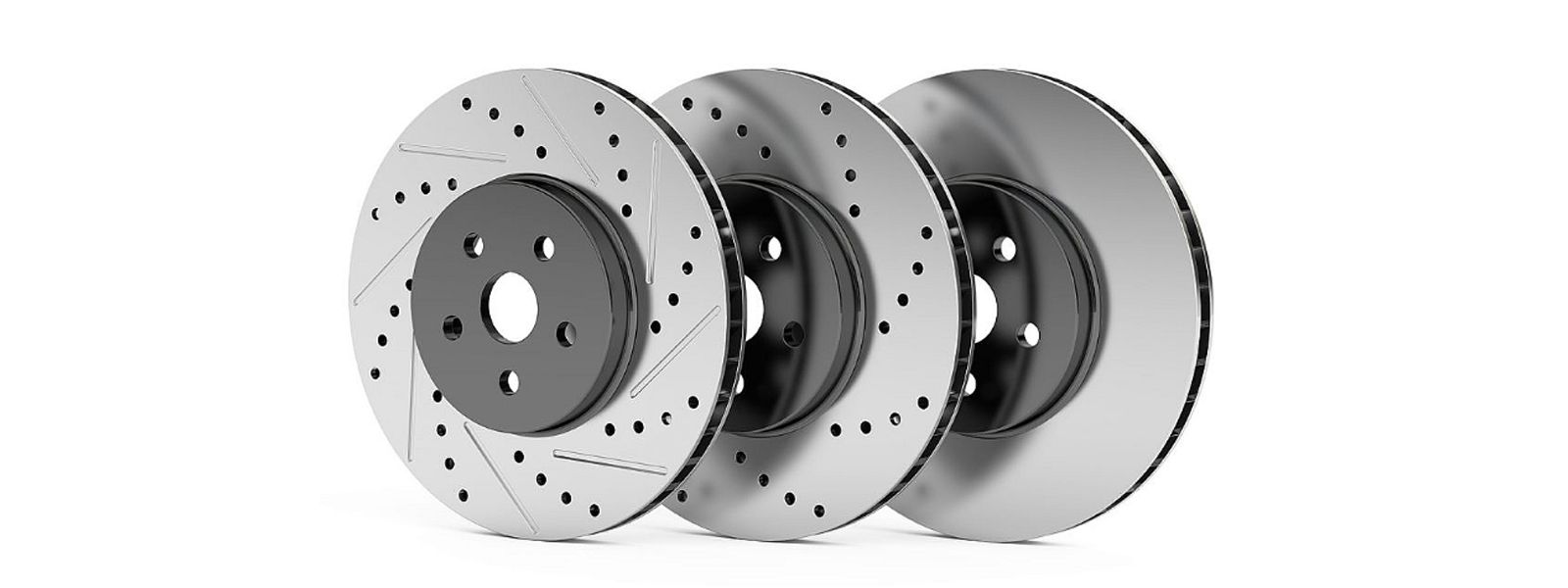
Vented Brake Rotors
At the heart of vented brake rotors lies an innovative internal design featuring cooling channels or vanes running between the two parallel friction surfaces. This unique construction allows air to flow directly through the rotor, dramatically enhancing heat dissipation and mitigating the risk of performance-robbing brake fade. The improved thermal management provided by vented rotors helps maintain a more stable operating temperature, resulting in enhanced braking consistency and pedal feel, particularly under heavy or sustained braking loads. Moreover, the reduced thermal stresses experienced by vented rotors translate to increased component longevity, helping to minimize issues such as warping and cracking.
Vented brake rotors are a common sight on the front wheels of passenger vehicles, where the majority of braking forces are concentrated and the need for effective heat dissipation is paramount. The specific design of the internal vanes and flow channels can vary, with more advanced configurations like curved vanes further optimizing airflow and heat extraction characteristics. Overall, the vented rotor design represents a significant evolution over basic solid rotors, providing superior thermal management capabilities that are well-suited for the braking demands of modern vehicle applications.
Drilled and Slotted Brake Rotors
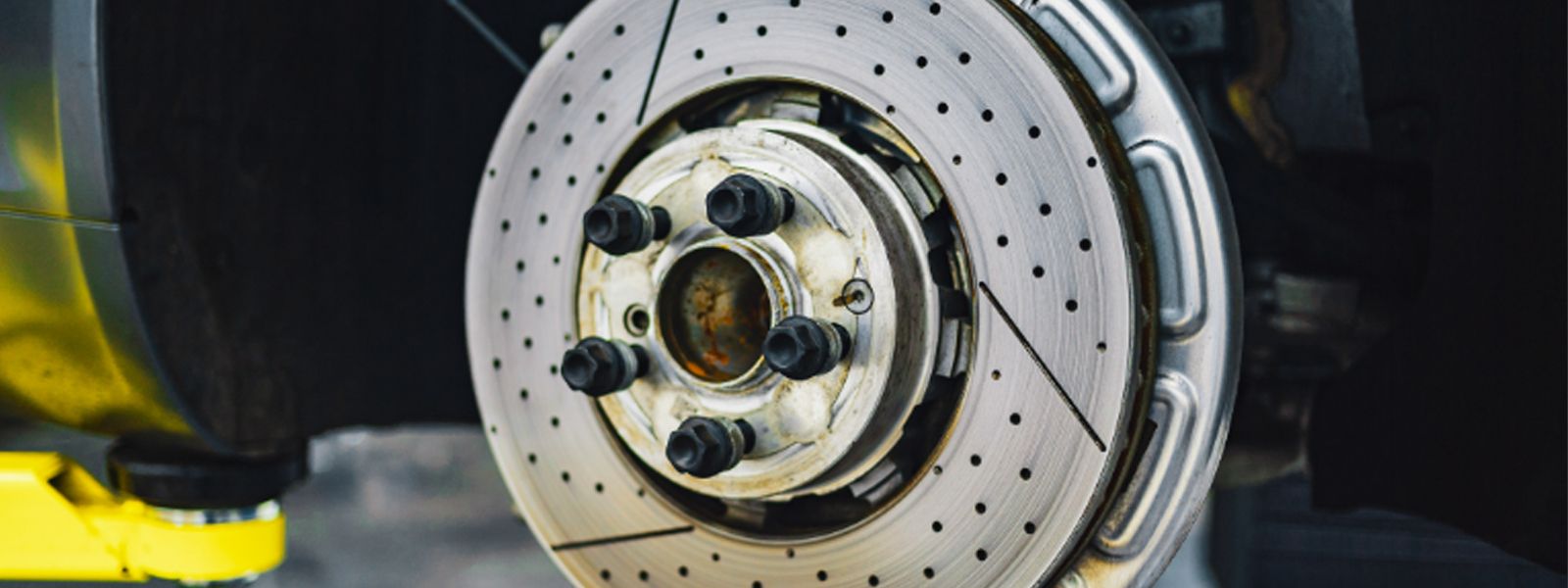
Drilled and slotted brake rotors feature a series of precisely engineered holes and grooves cut into the friction surface. This innovative design helps to significantly improve heat dissipation and gas evacuation, two critical factors in maintaining consistent and reliable braking performance. The holes allow for greater airflow across the rotor, facilitating more efficient cooling and preventing excessive temperature buildup that can lead to fade. Meanwhile, the strategically placed slots work to expel the hot gases and debris that can accumulate between the pads and rotor, preserving a clean interface for optimal braking response. Additionally, the unique surface texture created by the slots can enhance the initial "bite" of the brakes, providing a more immediate and confident pedal feel.
Drilled and slotted rotors are commonly found on high-performance vehicles and those used for enthusiast driving, where their enhanced braking capabilities are particularly beneficial. The specific design of the holes and slots can vary, with more complex patterns employed to further optimize cooling, gas evacuation, and structural integrity. Overall, this advanced rotor design represents a significant evolution over basic solid discs, delivering improved heat management and braking performance that cater to the demands of modern, high-output vehicles.
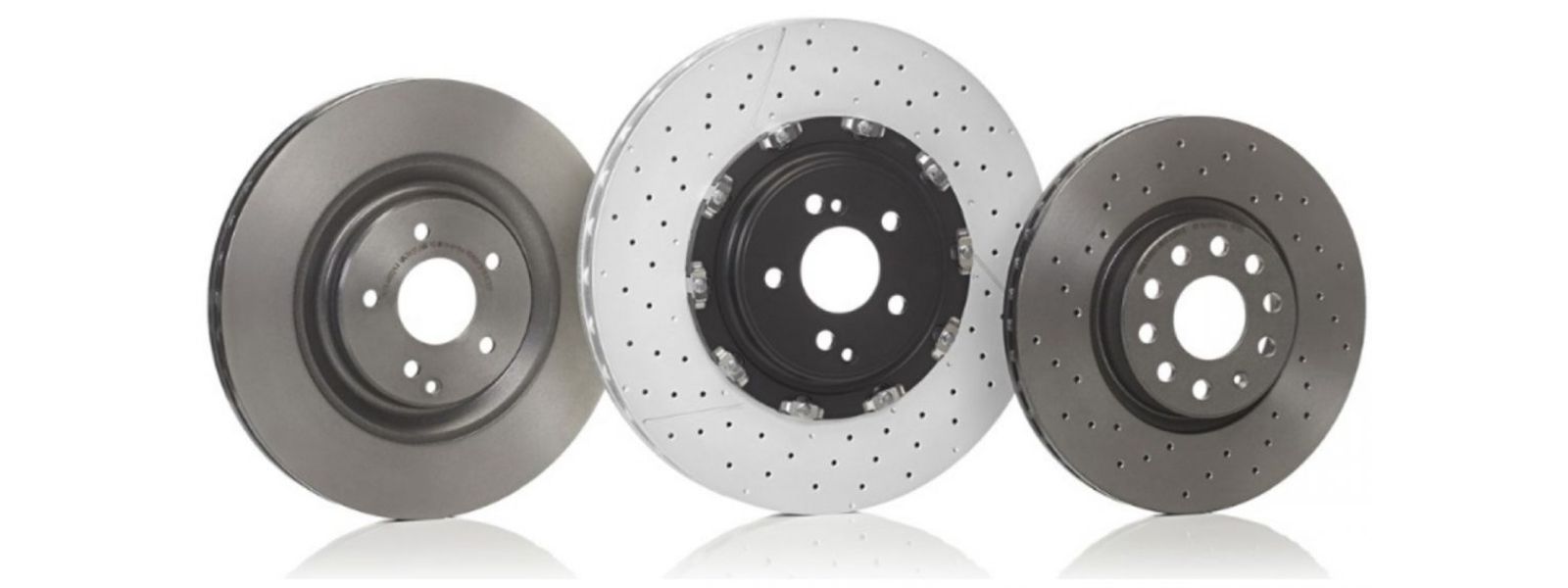
Composite Brake Rotors
Composite brake rotors feature a unique construction that combines a cast iron or steel friction ring with an aluminum or composite carrier. This innovative design approach offers several key advantages over traditional solid cast iron rotors. Most notably, the use of lightweight materials for the carrier portion results in a significant reduction in unsprung weight, which improves vehicle handling, acceleration, and fuel efficiency. Additionally, the composite construction allows for better thermal management, as the carrier materials have higher thermal conductivity than cast iron, helping to prevent excessive heat buildup and reducing the risk of brake fade. Composite rotors also exhibit enhanced corrosion resistance compared to their cast iron counterparts, improving long-term durability, especially in harsh environments.
Composite brake rotors are commonly found on high-performance and luxury vehicles, where weight savings and improved thermal management are particularly beneficial. The specific design of these rotors can vary, with different materials and bonding methods used for the friction ring and carrier. More advanced composite rotor designs may also incorporate additional features like cooling fins or vanes to further optimize thermal performance. Overall, the composite rotor represents a sophisticated and innovative approach to brake system design, delivering tangible improvements in weight, thermal management, and corrosion resistance.
Cross-Drilled and Slotted Brake Rotors
Cross-drilled and slotted brake rotors represent the pinnacle of advanced rotor design, incorporating a combination of precisely engineered holes and grooves to enhance braking performance. The series of holes drilled through the rotor surface, along with the pattern of slots cut into the friction ring, work together to significantly improve heat dissipation and gas evacuation. This prevents excessive temperature buildup that can lead to brake fade, while also maintaining a clean interface between the pads and rotor for consistent, responsive braking. The unique surface texture created by the holes and slots also helps to "clean" the brake pads during operation, removing any deposits or contaminants that could impair performance. Additionally, the cross-drilled pattern can help to mitigate the risk of cracking or warping under extreme thermal stress by reducing uneven expansion across the rotor face.
Cross-drilled and slotted rotors are commonly found on high-performance vehicles, sports cars, and other applications where enthusiast-level braking capabilities are desired, often being used on the front wheels where the majority of braking forces are concentrated. This advanced rotor design represents the pinnacle of brake system engineering, delivering superior thermal management, gas evacuation, and braking response compared to more basic solid or even slotted-only designs.
These brake rotors are usually used by high-performance vehicles. A-Premium is a good platform. Such auto parts rely on top-tier cooling and heat dissipation to achieve their phenomenal performance. Order from A-Premium can easily afford regular brake rotor replacement, which is a big concern with these components.


