
Control Arm: Function, Symptoms, and Replacement Guide (2026)

Whether you’re hearing strange clunks over bumps or noticing uneven tire wear, understanding how control arms work can help you diagnose problems early and make informed repair decisions.


Your vehicle’s suspension system relies on several critical components to keep you safe, and the control arm is the backbone of that system. In simple terms, a control arm connects the wheel hub to the vehicle’s frame, allowing the wheel to move up and down while maintaining proper alignment and absorbing road irregularities.
Whether you’re hearing strange clunks over bumps or noticing feathered tire wear, understanding these components helps you make informed repair decisions before a minor noise becomes a major safety failure.
Key Takeaways
-
The Connection: Control arms bridge the gap between the vehicle's chassis and the wheel hub, allowing for vertical travel while maintaining alignment.
-
Service Life: Typically 80,000–100,000 miles, though "Rust Belt" corrosion or heavy off-roading can cut this lifespan by half.
-
Critical Symptoms: Clunking noises, "memory steer" (where the car doesn't return to center), and uneven tread wear are primary red flags.
-
The Post-Repair Rule: A professional four-wheel alignment is mandatory after replacement to protect your tire investment.
-
Shopping Guide: Quality aftermarket auto parts from A-Premium match OEM design at lower prices, ideal for DIY enthusiasts and professional mechanics alike
What Is a Control Arm in a Car?
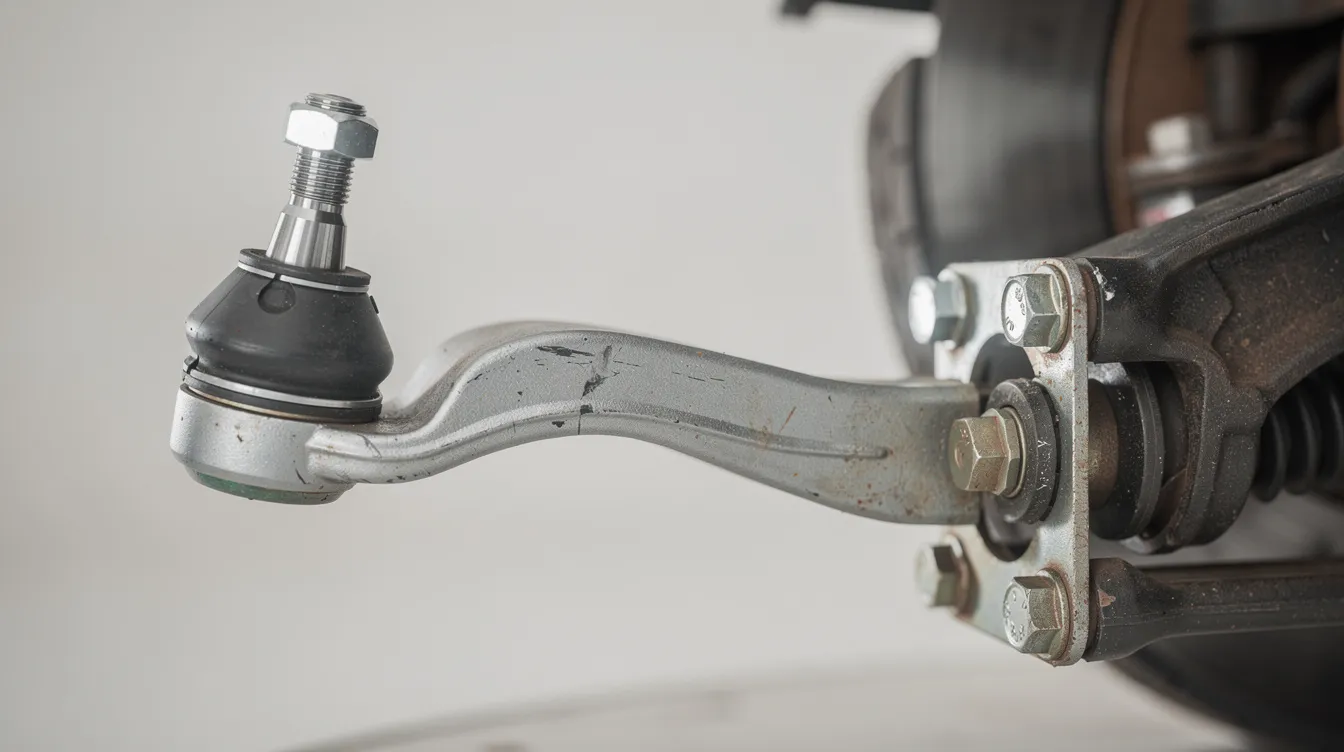
The control arm serves as the primary structural link of a vehicle’s suspension, acting as a hinged bridge between the chassis (frame) and the steering knuckle or wheel hub. At one end, the control arm connects to the wheel assembly, while the other end attaches to the chassis, allowing it to govern the wheel’s vertical travel and react to road irregularities while maintaining precise alignment.
Anatomy and Connection Points
A control arm assembly consists of three primary elements that facilitate multi-axis movement:
-
The Inboard End (Chassis Connection): The arm is attached to the vehicle's frame by a single pivot point, typically utilizing a rubber or hydraulic bushing. This allows the arm to pivot up and down while simultaneously isolating the cabin from road noise and harsh vibrations.
-
The Outboard End (Wheel Connection): The arm connects to the steering knuckle via a ball joint. This critical component acts as a high-mobility pivot, allowing the front wheels to steer left or right even as the suspension moves through its jounce and rebound travel.
-
The Arm Body: A rigid metal structure, usually made of stamped steel, cast iron, or forged aluminum, that maintains the geometric relationship between the body and the wheels.
Upper vs. Lower Configurations
In many advanced suspension designs (such as double-wishbone setups), the system is split into two distinct roles: upper and lower control arms. These components work together to link the vehicle's chassis to the wheels, maintain wheel alignment, and allow vertical wheel movement for proper handling and stability.
-
Upper Control Arms: These connect the top of the steering knuckle to the frame, primarily managing camber angles and stabilizing the wheel’s position during cornering. The upper arm specifically connects the top of the wheel assembly to the vehicle's chassis and is a key part of independent suspension setups.
-
Lower Control Arms: These connect the bottom of the knuckle to the frame. Because they are situated at the base of the assembly, they are frequently load-bearing, supporting the weight of the vehicle and absorbing the longitudinal forces generated during heavy braking and acceleration.
By synchronizing these components, the control arm ensures that the tires remain in constant, flat contact with the road surface, providing the stability and steering precision necessary for safe operation.
-
Service Life: Typically 80,000–100,000 miles, though “Rust Belt” corrosion or heavy off-roading can cut this lifespan by half.
-
Critical Symptoms: Clunking noises, “memory steer” (where the car doesn’t return to center), and uneven tread wear are primary red flags.
-
The Post-Repair Rule: A professional four-wheel alignment is mandatory after replacement to protect your tire investment.
For more info about control arms, please refer to What Does a Control Arm Do?
The Role and Importance of a Control Arm
Control arms are critical for vehicle stability, steering precision, and ride comfort—not just another suspension part you can ignore.
Control arms carry suspension loads and transmit forces to other components like springs and shock absorbers. They help maintain optimal tire contact and traction by keeping the tires perpendicular to the road during travel. Properly functioning control arms ensure maximum traction for improved cornering, braking, and overall vehicle safety. Control arms support the vehicle's weight and absorb shocks, minimizing excessive bounce and lateral sway. They also reduce excessive body roll during cornering, enhancing vehicle stability during high-speed maneuvers or sharp turns. By maintaining consistent traction, control arms are critical for efficient stopping distances and emergency maneuvers. Acting as a first line of defense against road noise and vibration, control arms absorb energy from road irregularities before it reaches the cabin. A control arm allows the suspension to flex, enabling the wheels to follow the road's contours over bumps and potholes. Lower control arms specifically support the vehicle's weight and handle forces from road impacts.
These components help maintain correct wheel alignment by controlling camber and caster angles, ensuring your tires stay flat on the road surface during cornering and braking. The bushings at one side absorb noise and vibration, keeping your cabin comfortable.
The ball joint at the end works similar to a human hip joint, allowing the steering knuckle to pivot when you turn the steering wheel while also moving up and down over bumps. In double wishbone designs, this configuration provides superior performance and handling.
A severely worn or broken control arm can cause sudden loss of steering—especially dangerous at highway speeds exceeding 60 mph.
Common Symptoms of Worn or Damaged Control Arms
Don’t ignore early warning signs. Worn control arm symptoms develop gradually and can result in serious safety issues.
Watch for these indicators:
-
The "Curb Pull": The car pulls to one side during acceleration or braking because the worn bushings allow the wheel's alignment to shift under load.
-
Steering Wheel Vibration: Often felt between $45–$60, indicating that the bushings can no longer dampening harmonic road vibrations.
-
Clunking over Bumps: A metallic "bang" or "pop" usually signals that the rubber in the bushing has completely torn, allowing metal-on-metal contact.
-
Erratic Tire Wear: If the inner edge of your tire is bald while the outer edge is healthy, your control arm is likely sagging, causing excessive negative camber.
If you notice any of these symptoms, check your suspension promptly. Complete control arm failure can cause the wheel to collapse, leading to total steering loss.
Inspection and Diagnosis (DIY and Professional)
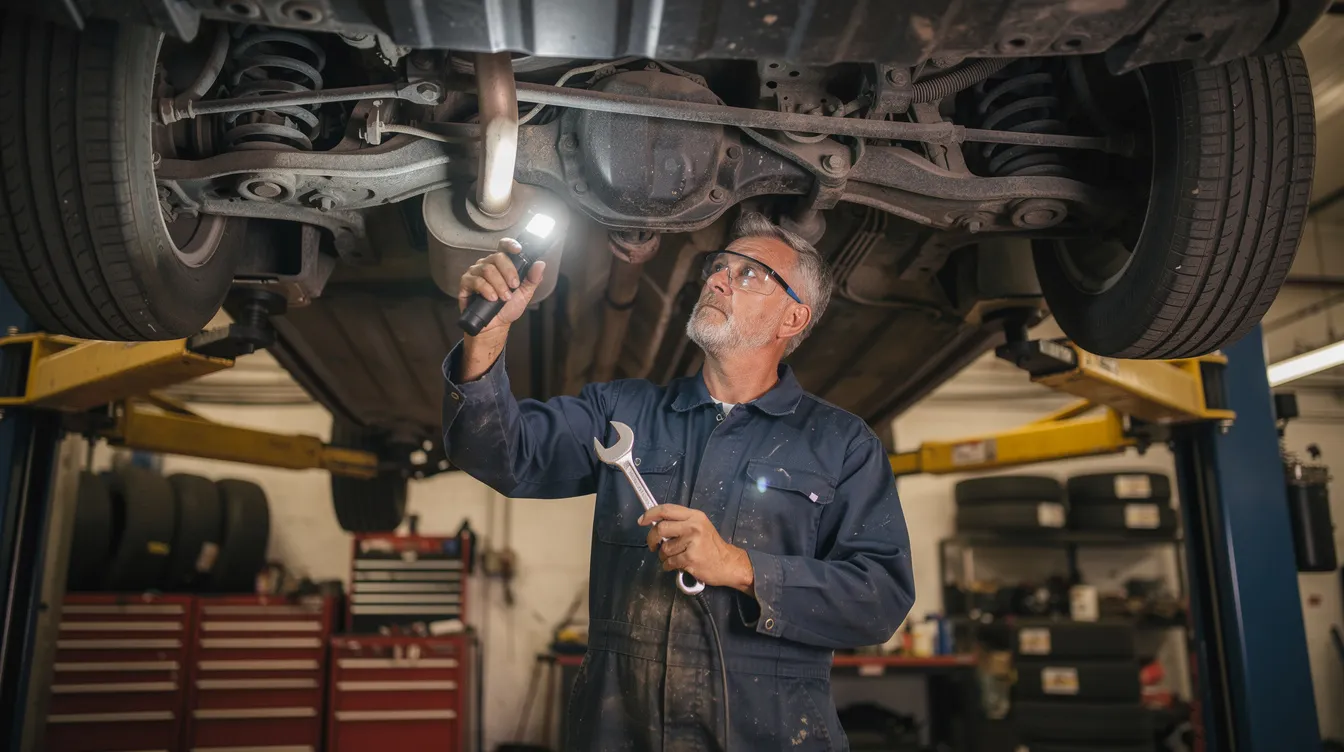
Regular suspension checks—every 15,000-20,000 miles—can catch problems early. Here’s a quick guide for DIY inspection:
-
Safely lift the vehicle and support it on jack stands
-
Visually check control arms, bushings, and ball joint boots for cracks or tears
-
Grasp the wheel at 12 and 6 o’clock—rock it to feel for vertical play
-
Check at 3 and 9 o’clock for lateral looseness
-
Listen for metallic clunks when bouncing the corner by hand
A professional mechanic can perform more thorough measurements on an alignment rack. After hitting potholes or curbs, have the area inspected even if the car seems to drive straight.
Repair, Replacement, and When to Act
Any cracked, bent, or worn control arm should be replaced fast to ensure safe handling. Act immediately if you notice:
-
Noticeable play in the arm or ball joint
-
Heavily cracked bushings or torn boots
-
Bent arms from impact
Complete control arm assemblies save time since bushings and ball joints come pre-installed. Basic DIY replacement involves removing the wheel, unbolting the arm from the subframe and knuckle, installing the new part, and torquing to spec.
Important: Always perform a wheel alignment after control arm replacement to restore camber and caster angles and protect tire durability.
Choosing the Right Aftermarket Control Arm from A-Premium
Correct part selection ensures proper fit and prevents returns. Before ordering, gather this information:
-
Year, make, model, and engine size
-
Drive type (FWD, RWD, AWD)
-
Specific position (front left lower, rear right upper, etc.)
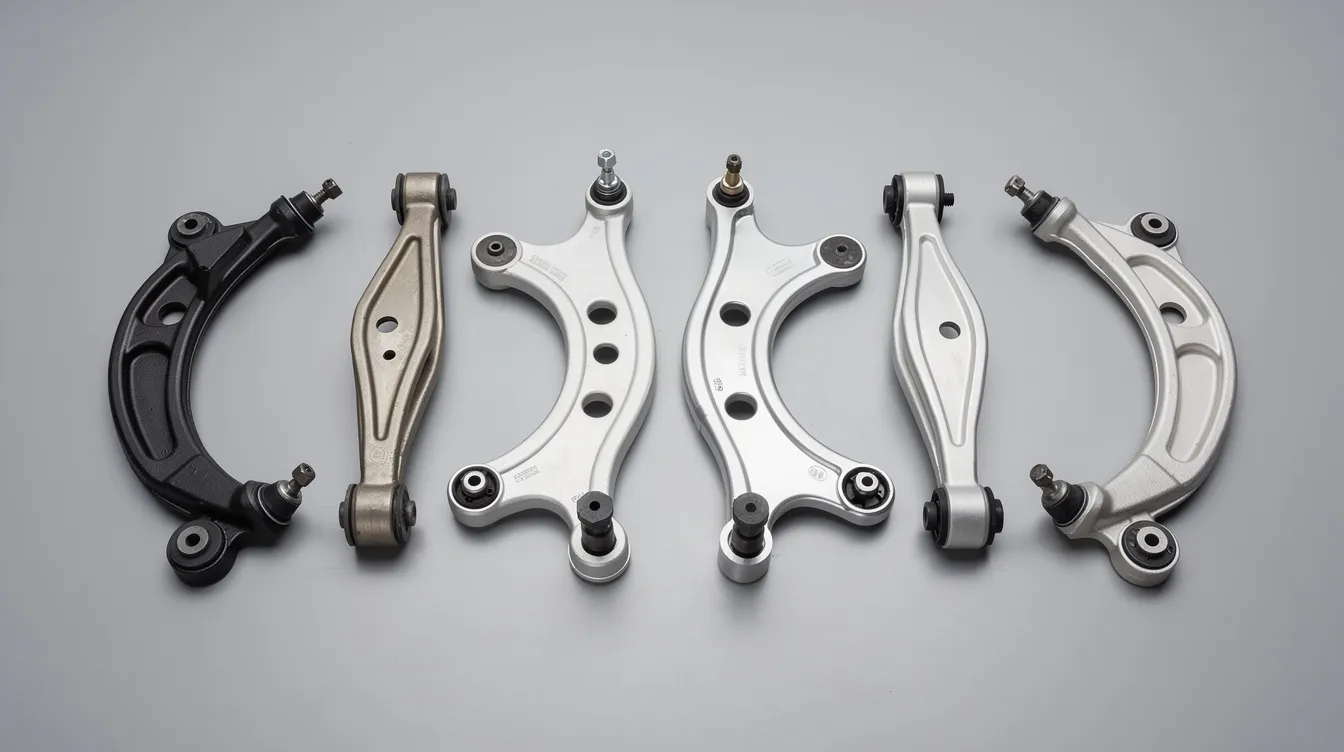
Aftermarket control arms are available in various designs and series to fit different vehicle suspension systems, including double wishbone and MacPherson strut configurations. Aftermarket control arms can cost anywhere between $20 and $1,700, depending on the brand, series, design, material, and recommended use. Many retailers keep a large stock of control arms and related suspension products for fast shipping. You can receive aftermarket control arms purchased online in as fast as two business days, with shipping available anywhere in the country.

Use A-Premium’s online vehicle selector or VIN lookup to match the correct part. Benefits include:
-
Direct-fit design matching OEM geometry
-
Quality steel or aluminum construction with corrosion-resistant finishes
-
Pre-installed bushings and ball joints on many assemblies
-
Competitive pricing ($60–$150 depending on application)
A-Premium offers quality direct-fit replacement products at lower costs than OEM. A-Premium provides free standard shipping and 90-day free returns on their aftermarket parts, with warehouse coverage across North America and other regions. Contact our 24/7 customer support for part verification before purchase—whether you’re a DIYer or professional, we’ll help you shop with confidence based on your preferences.
FAQ
How long do control arms typically last before they need replacement?
Under normal driving conditions, factory control arms and bushings last around 80,000–100,000 miles. However, rough roads, frequent towing, or performance driving can cause earlier wear. Inspections around 60,000 miles help catch problems before they become serious.
Should I replace control arms in pairs (left and right)?
Industry experts recommend replacing control arms in axle pairs on high-mileage vehicles to maintain balanced handling. If only one arm is bent from impact, replacing just that arm may be acceptable—but inspect the opposite side carefully.
Do I need an alignment after installing new control arms?
Yes. A professional wheel alignment is highly recommended after front control arm replacement, and often after rear arm replacement on vehicles with independent rear suspension. New arms can change camber and caster angles, affecting tire life and handling.
Are aftermarket control arms as good as OEM parts?
Quality aftermarket control arms from A-Premium are designed to meet or closely match OEM specifications. They provide comparable durability at lower cost—a strong choice for both DIY repairs and shop installations. Avoid ultra-low-cost no-name parts, which may fail within 30,000 miles.
Can I install a control arm myself at home?
Many mechanically inclined DIYers with basic tools, a jack, and jack stands can successfully replace control arms. Follow a repair manual, use proper torque specs, and add a post-installation alignment. If you’re unsure, work with a qualified technician for safety.


