Diagnose high pressure fuel pump failure with this guide. Learn causes like contaminated fuel, symptoms such as hesitation and limp mode, and proper testing steps to avoid unnecessary replacements and ensure safe repairs.


High pressure fuel pump failure is commonly caused by contaminated or incorrect fuel, restricted low-pressure fuel supply, internal wear, loss of fuel lubrication, or damage to the pump’s cam-driven mechanism. Typical symptoms include long cranking, hesitation under load, loss of power, misfires, unstable fuel rail pressure, limp mode, and a no-start condition. However, these symptoms do not prove the pump is bad. The low-pressure pump, fuel filter, pressure sensor, regulator, injectors, wiring, and ignition system should be checked before replacing the high-pressure fuel pump.
Safety note: Gasoline direct-injection and common-rail diesel systems operate at extremely high pressure. Never loosen a high-pressure fuel line while the engine is running or before completing the manufacturer’s depressurization procedure. Stop driving if you smell leaking fuel, see visible leakage, experience repeated stalling, or find metal particles in the fuel system.
A high-pressure fuel pump, often abbreviated as HPFP, can deteriorate gradually or fail suddenly. Early symptoms may only appear during a hot restart, hard acceleration, hill climb, or other high-load condition. As the problem worsens, the engine may enter limp mode, stall, or refuse to start.
Because weak fuel delivery, inaccurate sensor data, injector leakage, and ignition faults can create similar symptoms, a correct diagnosis should follow the entire fuel-pressure path instead of beginning with pump replacement.
Modern gasoline direct-injection and common-rail diesel engines normally have low- and high-pressure sides. The electric pump in or near the fuel tank moves fuel toward the engine at relatively low pressure. The engine-mounted HPFP then raises that pressure so the injectors can spray fuel directly into the combustion chamber.
Many high-pressure pumps are mechanically driven by a camshaft, cam lobe, tappet, or follower. This is why a worn drive component can reduce pump output even when the pump’s electrical connector and control circuit appear normal.
| Component | Main Job | Typical Location |
|---|---|---|
| Low-pressure fuel pump | Moves fuel from the tank to the engine | Inside or near the fuel tank |
| High-pressure fuel pump | Builds the pressure required for direct injection | On the engine or cylinder head |
| Fuel rail pressure sensor | Reports rail pressure to the engine computer | On or near the fuel rail |
A whining sound coming from the fuel tank is therefore more likely to involve the low-pressure electric pump than the engine-mounted HPFP. Keeping these components separate prevents an expensive diagnosis from starting with the wrong pump.
An HPFP can fail because its internal components wear out, but normal age is not the only possibility. A problem elsewhere in the fuel system can starve, contaminate, or overload the pump and cause the replacement to fail again.
High-pressure pumps contain precision-fitted plungers and valves. Dirt, rust, water, or other contamination can damage these surfaces, restrict valve movement, and reduce the pump’s ability to build stable pressure. Water contamination is particularly serious in diesel systems because diesel fuel also provides lubrication for the pump’s internal components.
A weak in-tank pump, clogged serviceable fuel filter, restricted line, or faulty pump control system may prevent enough fuel from reaching the HPFP. The resulting low rail pressure can look like a failed high-pressure pump even when the actual problem is upstream.
If the low-pressure pump operates intermittently, its fuse, wiring, ground, and fuel pump control module may also need to be tested.
Repeated high-pressure operation gradually wears plungers, valves, seals, and other moving parts. A worn pump may still produce enough pressure at idle but fail to keep up when fuel demand increases. Internal leakage can also make pressure build too slowly during starting.
On engines that mechanically drive the HPFP, a worn cam lobe, roller, tappet, or follower can shorten the pump stroke and reduce output. Installing a new pump without inspecting the drive mechanism may leave the original pressure problem unresolved or damage the new part.
Misfueling can quickly damage a high-pressure system. Gasoline in a diesel system reduces the lubrication available to the pump, while diesel or heavily contaminated fuel in a gasoline vehicle creates other drivability and fuel-system problems. If the wrong fuel was added, avoid restarting the engine and arrange proper draining and inspection.
A mechanically damaged pump may release metal particles into the fuel system. Replacing only the pump without cleaning or replacing the affected filter, lines, rail, injectors, or tank components can cause rapid repeat failure. The required scope depends on the vehicle manufacturer’s repair procedure and the extent of contamination.
High pressure fuel pump failure symptoms often begin when the engine demands more fuel than the weakened pump can supply. Pay attention to when the symptom occurs, not just what it feels like.
Common related codes include P0087, P0088, P0089, P0191, and P2293. These codes identify pressure or control problems, not a confirmed failed pump. For example, P0087 indicates fuel rail pressure is too low, but the cause may be the supply pump, a restriction, a leak, sensor data, a regulator, an injector, or the HPFP.
Yes. If the HPFP cannot maintain the requested rail pressure, the injectors may not deliver the expected amount of fuel. Misfires may then appear during hard acceleration, towing, climbing, or other high-load conditions.
The misfire pattern matters. Random or multiple-cylinder misfires accompanied by low actual rail pressure make a fuel-supply problem more plausible. A persistent misfire isolated to one cylinder is more likely to require checks of that cylinder’s injector, spark plug, ignition coil, compression, and wiring. Use this ignition coil vs. spark plug diagnosis before assuming every misfire originates at the fuel pump.
Gasoline GDI and common-rail diesel vehicles can both experience hard starting, power loss, pressure-related codes, limp mode, and stalling. The major difference is the potential repair scope. If a diesel HPFP suffers internal mechanical damage, metal particles can circulate through expensive injectors and other high-pressure components.
| Gasoline GDI | Common-Rail Diesel |
|---|---|
| Often shows hesitation, misfires, hard starts, and pressure deviations | Often shows hard starts, power loss, limp mode, and pressure deviations |
| Cam follower or drive wear may be relevant on some engines | Water, wrong fuel, and loss of fuel lubrication are major concerns |
| Repair may remain localized if no contamination is present | Metal contamination may require system-wide repair |
The most reliable diagnosis compares what the engine computer is requesting with what the fuel system is actually producing. Because fuel pressures and test procedures vary widely, use specifications for the exact year, make, model, engine, and fuel system.
| Diagnostic Finding | What to Check Next |
|---|---|
| Low inlet pressure and low rail pressure | Low-pressure pump, filter, lines, wiring, and controller |
| Normal inlet supply but rail pressure falls short under load | HPFP output, regulator, injector leakage, and mechanical drive |
| One-cylinder misfire with normal rail pressure | Injector, ignition, compression, and cylinder-specific wiring |
| Implausible rail-pressure data | Pressure sensor, connector, reference voltage, ground, and signal circuit |
| Metal particles in the fuel system | Stop running the engine and determine the full contamination scope |
The correct fix depends on the failed part and whether contamination has spread. Do not replace the HPFP merely because the engine has a fuel-pressure code.
If testing finds inadequate inlet supply, the repair may involve a clogged serviceable filter, damaged line, in-tank pump, wiring, ground, fuse, relay, or control module. Correcting the upstream problem can restore rail pressure without replacing a functioning HPFP.
An inaccurate rail pressure sensor or failed pressure-control device can produce incorrect pressure data or prevent the system from following commands. Replace it only after verifying its circuits and performance against vehicle-specific specifications.
A fuel additive or external cleaning cannot repair scored plungers, worn valves, leaking internal seals, or damaged drive components. Internally cleaning or rebuilding an HPFP requires specialized equipment and a contamination-controlled environment. If bad fuel caused the problem, the fuel system itself may need to be drained and cleaned according to the manufacturer’s procedure.
Some diesel high-pressure pumps can be professionally tested and remanufactured, but many modern gasoline direct-injection applications are serviced by replacing the pump assembly. Repairability depends on the pump design, available service parts, internal damage, and manufacturer guidance. Opening the pump at home is generally not an appropriate repair.
Replacement becomes appropriate when low-pressure supply is correct, sensor and control inputs are reliable, injectors are not causing the pressure loss, the mechanical drive has been inspected, and testing confirms that the HPFP cannot build or maintain the required pressure.
The installation must follow the exact service procedure. Some applications require new seals, one-time-use high-pressure lines, drive-component inspection, priming, relearning, calibration, or other vehicle-specific steps.
Metal contamination changes the repair from a pump-only job to a fuel-system contamination problem. Depending on the vehicle and the location of the debris, the repair procedure may call for inspecting, cleaning, or replacing the tank, filter, supply lines, high-pressure lines, rail, pressure-control parts, and injectors. Installing a new pump into a contaminated system can destroy it quickly.
Continuing to drive is not recommended once a high-pressure fuel problem is suspected. A vehicle that currently has only occasional hesitation may later lose power, enter limp mode, stall in traffic, or become a no-start.
Repeatedly clearing codes or restarting a stalling vehicle does not fix the pressure problem. Towing is the safer choice when the vehicle cannot maintain predictable power or when fuel leakage is possible.
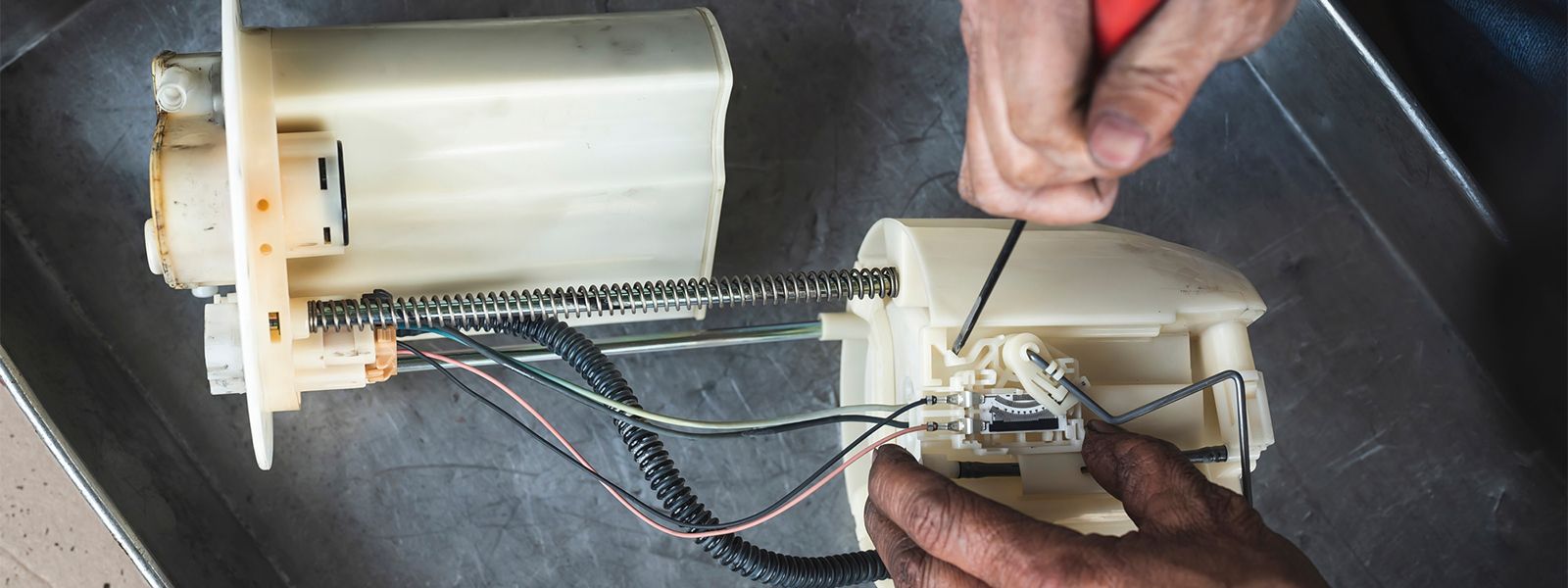
Confirm which pump has failed before ordering. An in-tank fuel pump assembly and an engine-mounted high-pressure pump are not interchangeable, even though their symptoms can overlap.
For the replacement part, check the complete year, make, model, engine, fuel type, production notes, connector design, mounting configuration, original part number, and approved interchange numbers. Direct-injection engines may use different pumps within the same model year, so engine size alone may not be enough.
After testing identifies the failed component, use the vehicle selector to review compatible A-Premium fuel pump options. Read every fitment note and product specification before purchase. A-Premium also provides customer support, fast shipping options, and product-specific warranty and return information to help you confirm the correct replacement.
Before installing a new pump, correct the condition that damaged the old one. Restricted supply, contaminated fuel, worn drive components, wiring faults, or metal particles left in the system can cause a repeat failure even when the replacement pump fits correctly.
Preventive maintenance cannot eliminate normal mechanical wear, but clean, correct fuel and early diagnosis can reduce avoidable damage and help keep a localized fault from becoming a system-wide repair.
The strongest evidence is normal low-pressure supply combined with actual rail pressure that repeatedly fails to match commanded pressure after the sensor, regulator, injectors, wiring, and pump drive have been checked. Symptoms or a trouble code alone cannot confirm the pump.
No. An early or intermittent failure may first cause long cranking, hesitation, or power loss only under load. A code may not appear until the pressure deviation becomes large or lasts long enough to meet the vehicle’s fault criteria.
Yes. Direct-injection systems need sufficient rail pressure before normal injection can begin. If the HPFP cannot build the required starting pressure, the engine may crank normally but fail to start.
Usually not. The in-tank electric pump supplies fuel at lower pressure, while the engine-mounted HPFP raises it to the pressure required for direct injection. Some vehicles use different fuel-system layouts, so verify the exact design before ordering parts.
Running very low on fuel more directly affects the in-tank electric pump because fuel helps cool and supply it. If the in-tank pump draws air or cannot maintain flow, the HPFP may also receive inadequate inlet supply. It should not be treated as proof that the HPFP itself has failed.
There is no reliable universal mileage. Pump life depends on its design, fuel quality, contamination, lubrication, upstream supply, drive-component condition, maintenance, and operating environment.